
Why does some chicken look pink?
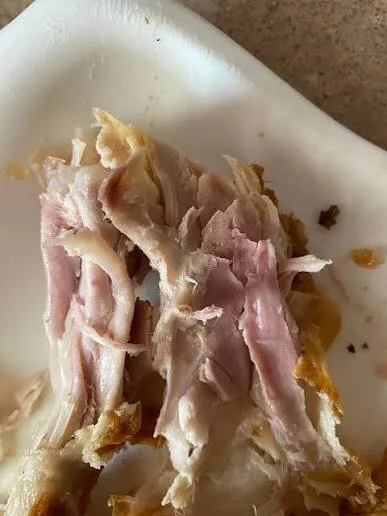
Fully cooked chicken with a tinge of pink from roasting
Even when fully cooked, chicken can sometimes appear slightly pink near the bone. This is a natural result of how chicken is processed and how proteins react during cooking—especially with rotisserie roasting and brining.
Every bird at Spitfire Chicken is cooked to a safe internal temperature and held to strict food-safety standards. We continually monitor the temperature of our chicken, and ensure that every bird is roasted to the internal temperature of at least 165 as recommended by USDA, CDC and others.
Here's an article that may help explain the pinkness, especially in younger birds and in dark meat.
An excerpt from the article explains further:
"White and dark meat are different. The protein myoglobin is “one of the transportation vehicles that moves oxygen” around the body, Goldwyn says. It mixes with water to form “myowater,” which is the pink-hued liquid — it’s not blood! — you often find in packages of raw meat. Because it helps muscles that do a lot of work, myoglobin is found in higher amounts in legs and thighs, hence their categorization as dark meat, explain Dan Souza and Alyssa Vaughn at Cook’s Illustrated. This higher concentration of myoglobin in dark meat means it’s more likely you’ll end up with pink spots there because of some of the factors that I’ll go into shortly.
Chickens are slaughtered young. Those that are processed for meat are often just 6 to 8 weeks old. At that age, according to the USDA, the bones have not completely hardened, so “pigment from the bone marrow seeps through the bones and into the surrounding area.” This can lead to a dark or bloody-looking appearance. Freezing exacerbates the problem, as ice crystals can puncture the bone and release more marrow. Moreover, the lack of fat under the skin of young chickens allows more oven gases to get through to the meat, which can also create a pink tint, the USDA says."